GIRLS on film // flock foto collective
The ability to define what photography is considered ‘proper’ or what constitutes a photographer in our hyper-digital society, where just about every living thing with functioning thumbs has access to a camera or device which allows you to take photographs, seems quite a lengthy task. I remember getting a small digital camera for my birthday when I was about 7 and I would capture everything that caught my attention. I would photograph corners of the garden that only my childish frame would fit into, or my family’s knees cramped underneath a table, angles that could only be explored by me. My little camera was my second eyes, a teacher, a friend, who allowed me to understand the world around me and my relationship to it.
In later years my camera was sadly confined to a draw whilst I explored new things that became available to me. It was not until many years later, after I finished university, that I began to rekindle my interest in photography. My dad had always dabbled in the art form, although never professionally. When I moved away from home for the first time he let me take his camera. A fairly impressive digital Canon. I trapsed the streets of Leeds capturing brief moments I found interesting, just as a warm-up. But, like many artistic practices, I soon felt overwhelmed. I didn’t know what all the buttons did. I couldn’t speak the language of photography. This soon transformed to growing anxieties about what I was taking pictures of, if I had the right to take these pictures, and that no one would ever be bothered about viewing these images, despite them being moments of my life, captured with my eyes before any involvement with a camera, and developed in the dark room of my mind. They were parts of me and I disregarded them because I knew that an entire world of photography existed behind the pearly gates of academia, practice, and access. I didn’t stand a chance.
I have a feeling these instances of anxiety, imposter syndrome, and the impending doom of creating art for a very demanding world keeps many people away from their right to explore different forms of creative practice, photography included. Well, what if I told you that there are people across the north who are redefining the expectations of photography and reclaiming its accessibility as a practice for all. And they are hiding in plain sight.
It was a Sunday afternoon, the sun oozing through the momentary blips in the grey clouds, illuminating the sloppy showers of rain. I had arranged to meet up with an old friend from Uni, Izzy, who is part of a photography collective that were hosting an exhibition and zine launch funded and facilitated by Hyde Park Book Club. I chucked on a jumper and headed on my way, hoping to miss the next downpour. But the sun kept on shining. What a wholesome Sunday afternoon.
‘Flock Foto Zine Launch and Exhibition Today 1-6pm’, the sign read.
I met Izzy and the rest of the group in the snug. They had arranged their photography round the room, each table covered in homemade stickers, a corner where visitors could make their own cyanotype images, and Izzy front and centre selling zines from a wooden table.
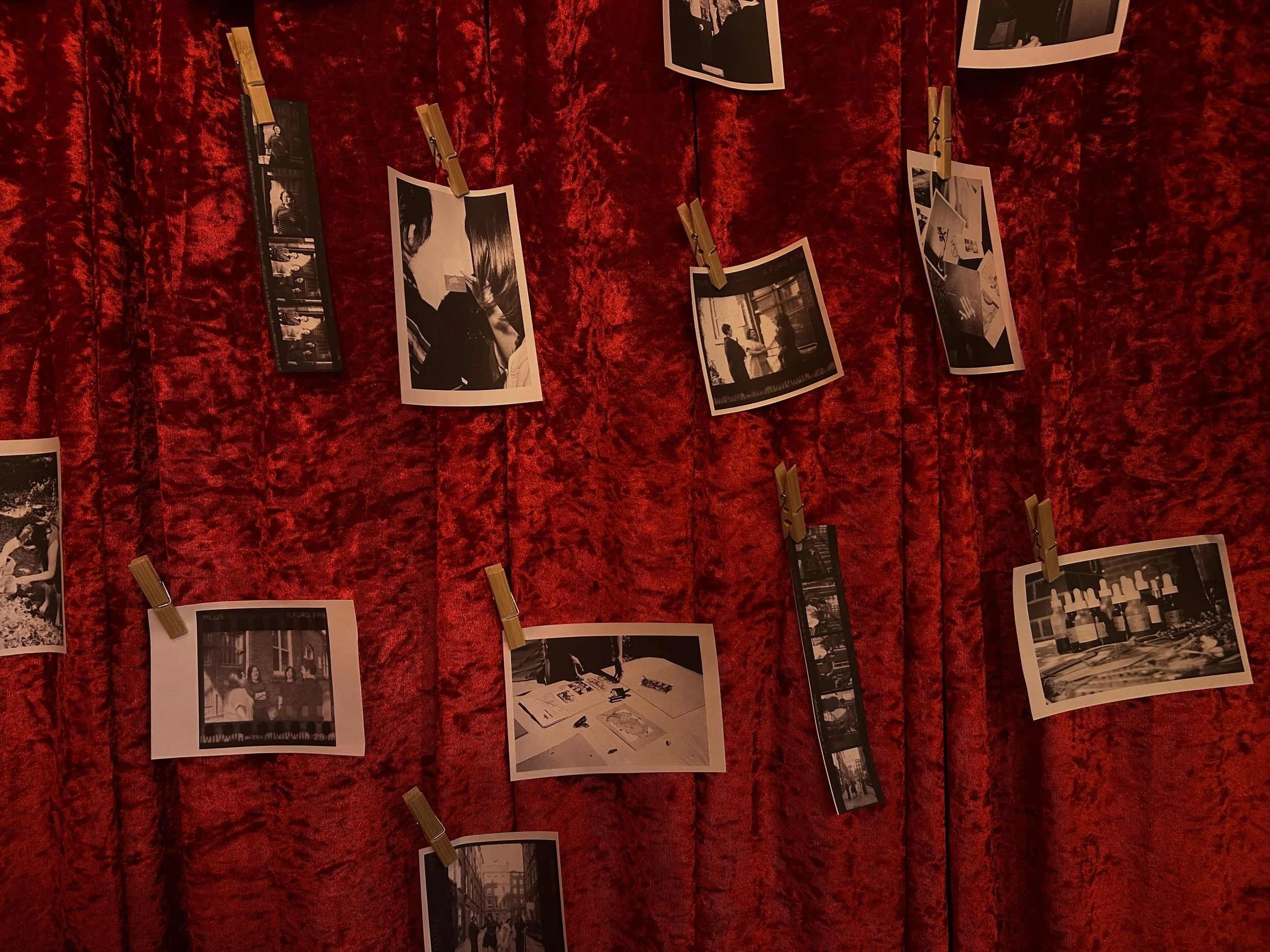
It was a beautiful atmosphere. The little room was like a lazy river of supportive friends, keen creatives, stories, and laughter. They were making their way around each crowded table, losing themselves in conversations with strangers along the way. The back wall was set up as a small exhibition - their photographs pegged to strings that graced the red velvet backdrop. It was fascinating to see each image lined up, each one reflecting a distinctive voice and personality, yet so organically flowing with one another. It felt as though I was experiencing a cacophony of creative voices that unconventionally yet so beautifully harmonised. There was no singular voice that dominated the exhibition. Instead, it was a shared conversation or journey, a reflection of those smiling faces gathered around the room. I first sat down with Izzy to ask her about Flock Foto; where they are based, who they are, what they do, and all the unexpected stories that emerge somewhere between question and answer.
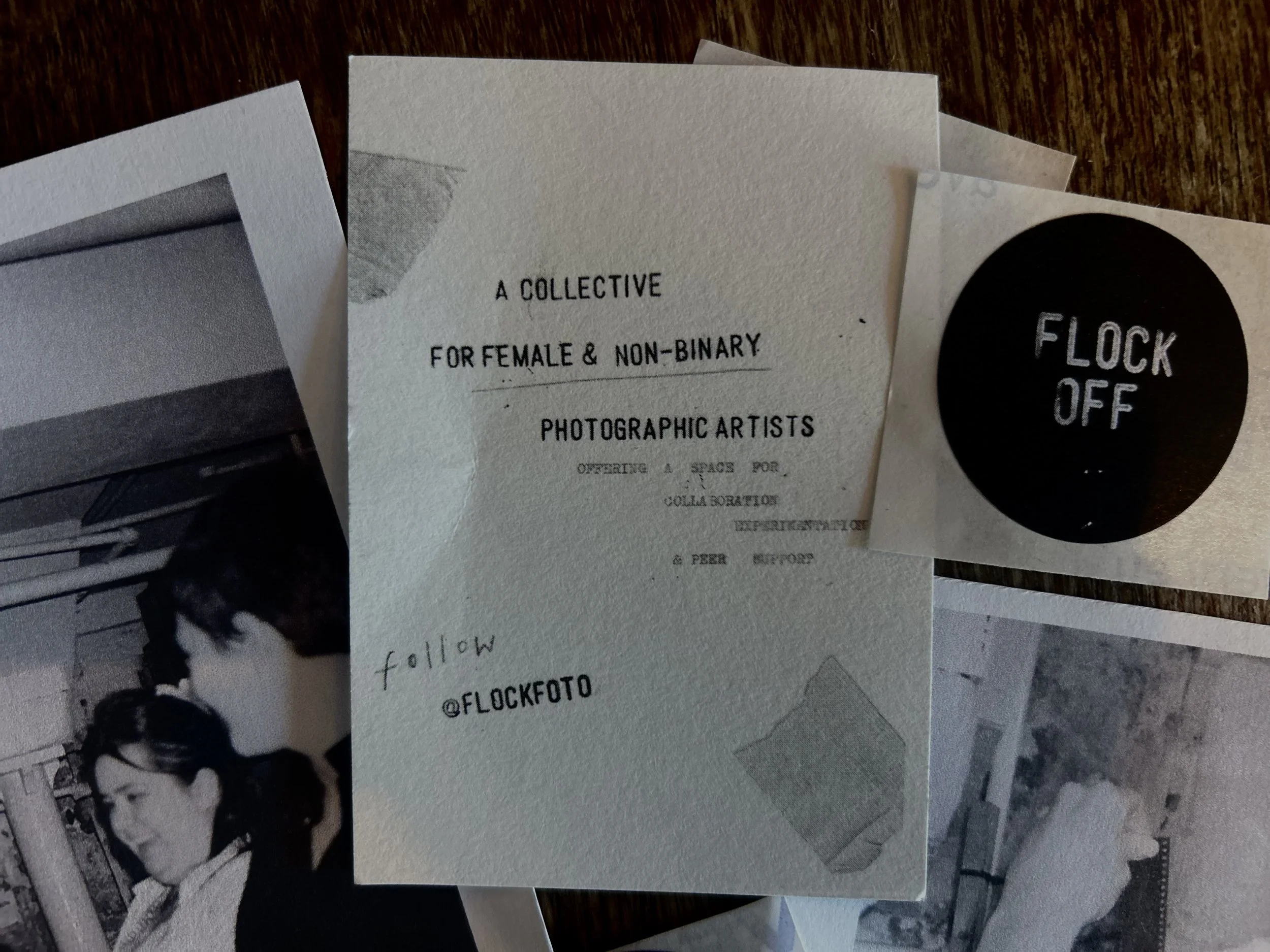
Flock Foto are a Leeds-based photography collective made up of female and non-binary members of all ages, abilities, and backgrounds. They first emerged from a peer support group in 2025, founded by Roz Doherty and Bianca Wallis-Salmon. Doherty, a photographer and alumni of Bradford College. And Wallis-Salmon, Leeds University and Arts University alumni. They applied for funding from the Leeds City Council to set up workshops and exhibitions that were accessible to all abilities and socioeconomic situations. The success of the peer support group project saw the making of Flock Foto (Bianca was a key part of helping to establish Flock), who power on through the cultural landscape of Leeds with determination, creativity, and solidarity.
Photography is an expensive hobby and its academic potential only increases the dogma around what constitutes a great photograph and who can take it. Although smartphones, disposable cameras, and cheaper digital cameras offer the promise of opportunity to budding young creatives, elitism still weaves its way through the language, exposure, and success of photography through ways such as medium gatekeeping (dismissal of digital photography in favour of traditional and more expensive film), strict technical rules that leave no room for self-exploration and individuality within the practice, and originality shaming (mocking photographers for capturing common subjects). This ‘lens swinging’ attitude is more prominent in collectives of mixed genders or predominantly male members, where a competitive atmosphere only contributes to a capitalist way of viewing, understanding, and valuing photography as an artform. The pioneering members of Flock are single handedly challenging and changing this attitude by reclaiming photography as an intimate experience and safe space where photographers from all walks of life can access a photographic education in solidarity and acceptance.
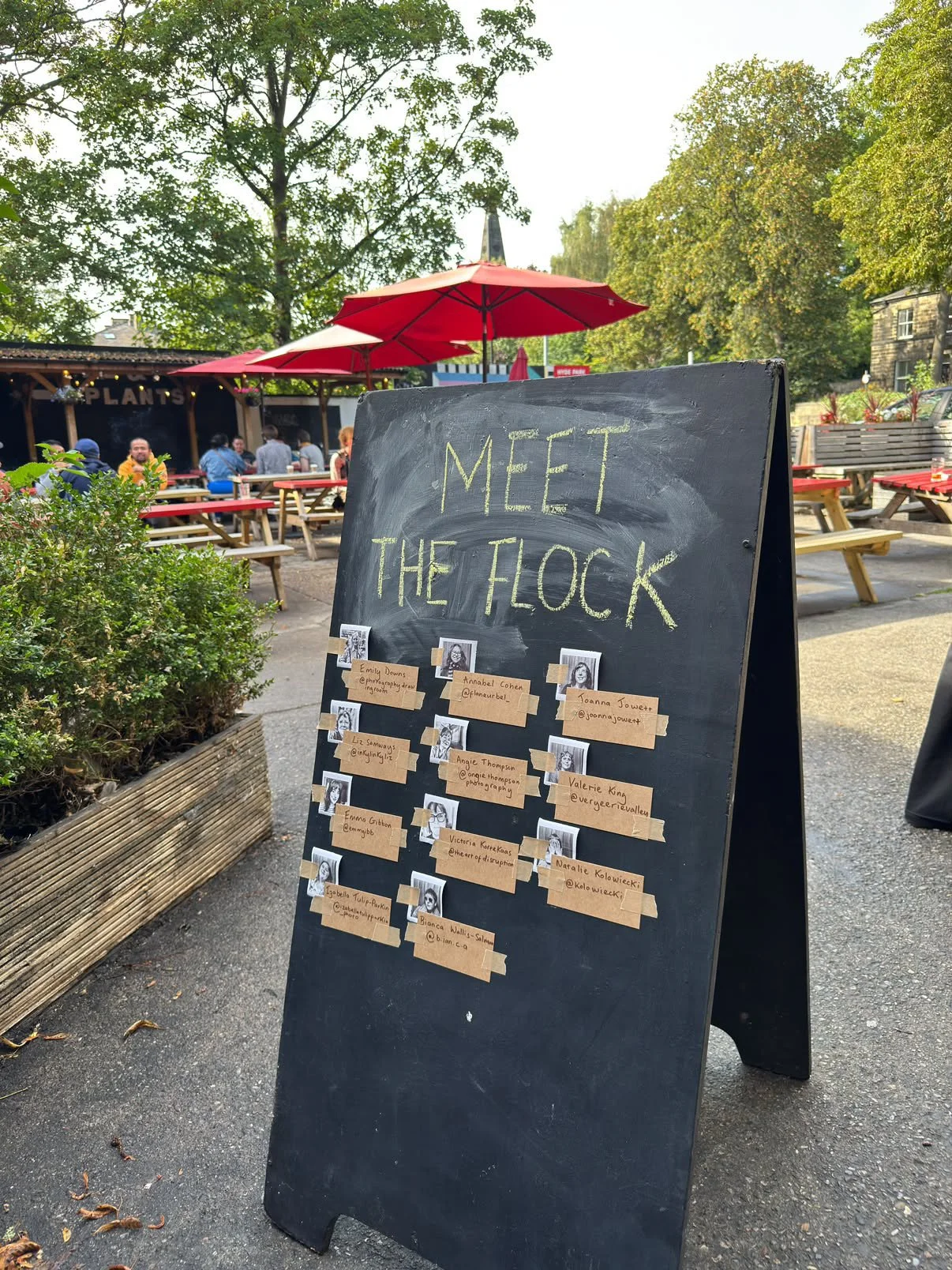
As I have mentioned, the Flock Foto are gender-specific, accommodating for women and non-binary people, although after speaking with some of its members it is clear that the intention here is not to promote a radical form of feminism, but simply to practice their own relationship to feminism and equality which, in my opinion, is the most radical thing one can do - letting everyone have a voice, no matter how loud, quiet, or unsure it may be. To truly flex their comradely muscles, Flock have installed their very own stewardship team comprised of members; Izzy, Bianca, Joanna, Natalie, Annabel, and Valerie, who steer the collective in line with their supportive values, ensuring a safe space for all members and those new in joining the group.
I asked members, Izzy, Angie, and Emma, about their own personal relationship to photography and the journey it has taken them on and how Flock allowed them to mend their sometimes-fragile relationships to photography. Both Izzy and Emma came to photography first through personal intrigue and familial inspiration. Izzy took me on a heartwarming journey of her childhood and her hobby-fanatic Dad who gave her his old camera before she did her A-levels. Coming from North London, Izzy talked about how grateful she was to not only have access to many art galleries and creative opportunities in her hometown, but also how her parents endorsed her creativity, making sure that as a family they were always doing, exploring, and creating, most of the time imaginatively and at low cost. Izzy ended up studying photography at university, but she had one essential requirement; her education must take place up north, in honour of her Dad’s Geordie roots. Eventually settling for Leeds Arts University, Izzy was thrown headfirst into a new world of photography, one that was quite confronting despite the amazing facilities she had access to. The confrontation sprang from the sudden shift of what photography was supposed to do or mean. Before uni, Izzy honed her craft by taking pictures of family members, her mum in particular. Her camera grew with her through her iconic teenage phases, the beloved goth phase was one mentioned. Her camera, like mine as a child, was her second vision, a vehicle through which her soul could speak to her and help her make personal connections with her family, friends, a world around her. Each photograph was an intimate conversation between the tangible world and her own imagination. It is important but often forgotten in mainstream photographic practice that each roll of film is like its own language; sentences constructed of specific memories and places. University came with a higher demand where students were expected to find their niche almost instantaneously without venturing too far from what is considered trendy or cool. Izzy described the vulnerability of navigating a new space in a new city under the guise of a photographer; calling herself a photographer amid many other practicing photographers felt quite overwhelming. New and monetised versions of photography were advertised to her, fashion, for example, which felt miles away from her own relationship to her practice, despite her incredible talent.
This prevailing feeling of intimacy and vulnerability was shared in my conversations with Emma and Angie. Emma also explored the academic side of photography. She told me that there was little optimism for future sustainability in university settings, with curriculums teaching you specific ways of photography that did not necessarily prepare you for the wider world and did not really focus on the role photography has on the individual as a form of therapy for the soul. Angie, however, came to photography later in life. She discovered her talent and passion on her own terms without academic structures, although they still managed to infiltrate her understanding of ‘proper’ photography. Like Izzy, Angie’s camera allowed her to re-visualise her deepest emotions, family relationships, and place in the world, giving her permission to reclaim what was most important to her. It allowed her to reconnect with her inner-self amid the hamster-wheel of work, family health complications, and overall pressures of 21st century life.
After university, Izzy explored different collectives across Leeds where she could continue her practice and find her niche once she had broken free form the chains of university curriculum. She found that many were very expensive and operated on a hierarchical basis, one that was dependent on someone’s experience or size and value of their equipment - nothing ever seems to escape the rules of phallocentrism, it seems. Emma found herself submerged into the world of work and lost touch with her practice until a few years later when she gradually became inspired by the growth of cultural collectives and creative opportunities in her hometown of Grimsby. Angie’s career with Leeds Art Gallery presented her with a demanding and competitive outlook to creative practice where everything is based on networking and ego, where everything has to be done to a certain standard, a mostly unattainable standard.
Izzy, Emma, and Angie came to Flock from a place of vulnerability and in turn found community, encouragement, and solidarity – something that made the drive from Grimsby well worth it for Emma. Angie described Flock as like a big warm hug. Even after just spending a few hours with them that Sunday afternoon, I very much agree with that statement. Flock Foto celebrate vulnerability and allows members to set their own boundaries and how they wish to communicate them, giving their practice a voice and allowing it to take part in a shared conversation where their work is not criticised or held against another. Izzy had a beautiful way of expressing how Flock nurtured her attitude towards her own practice, saying how the group encouraged her to look back to her early years of photography, to her life-long portfolio, and immerse herself in her individual relationship to photography, not one that is expected of her as a photographer.
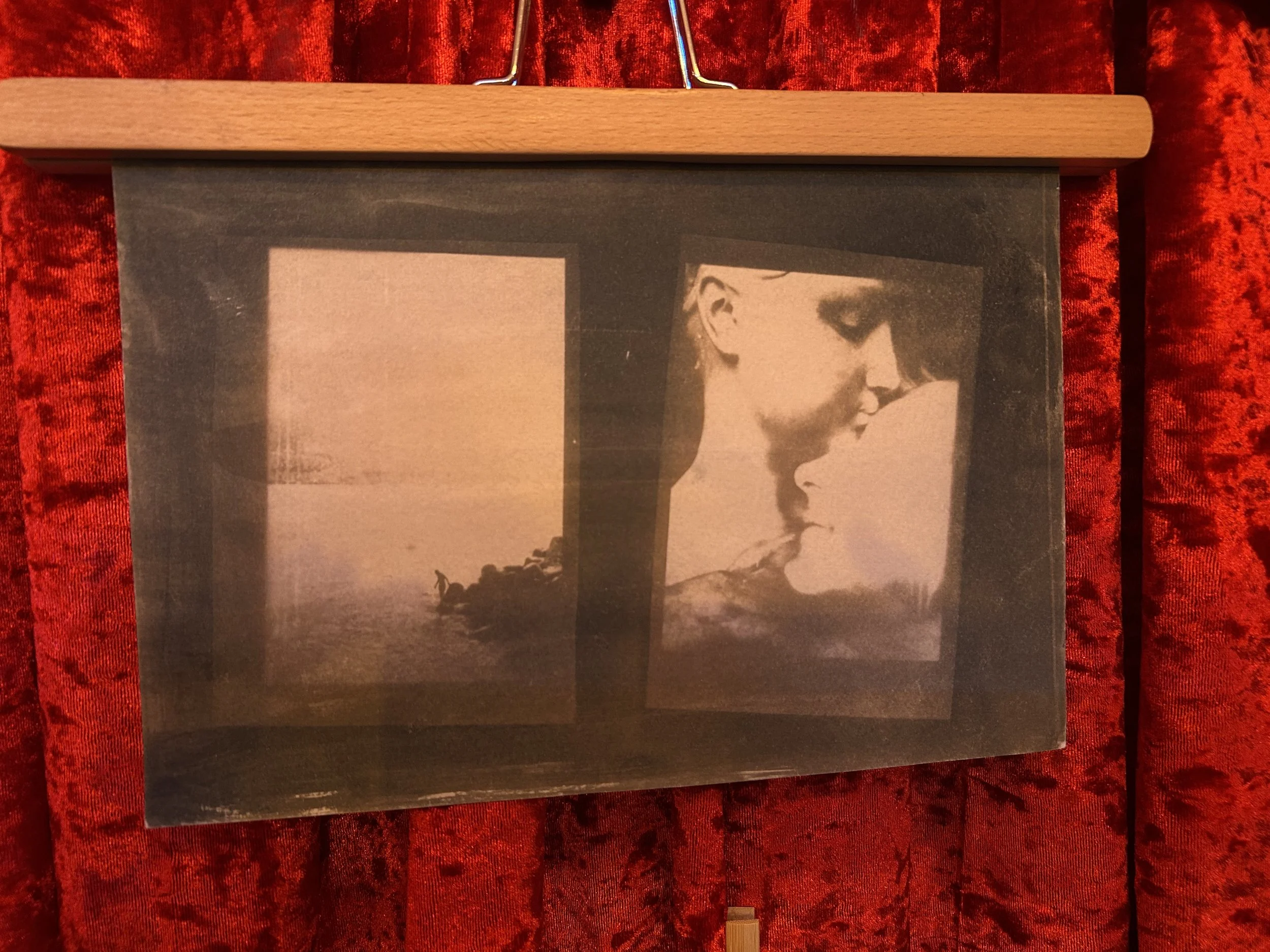
As I wondered round the exhibition and zine launch I felt overwhelmingly inspired, but also a little frustrated at myself. Frustrated that I had given in to imposter syndrome and accepting that because my first photograph didn’t come out looking like a Nan Goldin original there was no point. Or that because I didn’t understand my camera, it would not understand me. I decided to offload my inner turmoil to a member of Flock I met whilst taking part in their cyanotype workshop - Annabel. She guided me through the process of layering watercolour paper covered in green ferric ammonium onto a sheet of cardboard, before placing a photocopied original Flock image on top, followed by a sheet of plastic. We ventured outside to let it dry in the sun. As it lay there drying, Annabel and I got to talking about film cameras. She gave me advice on how to get started, what various buttons do, and how Flock would welcome me with open arms no matter my illiteracy and lack of experience with a camera. She explained to me the science behind the cyanotype we were making and by the end of it I felt like a pro. We were joined by more Flock members who were interested to know if I dabbled in photography and enlightened me in their own practices. Acceptance radiated from them. Almost tangible in the room. It was entrancing to hear such raw creativity and unguarded passion unfold without the usual hunger to outshine one another. There was no hierarchy, no keeping score, only a shared desire to see each other thrive and a belief that individual brilliance need not come at the expense of collective success.
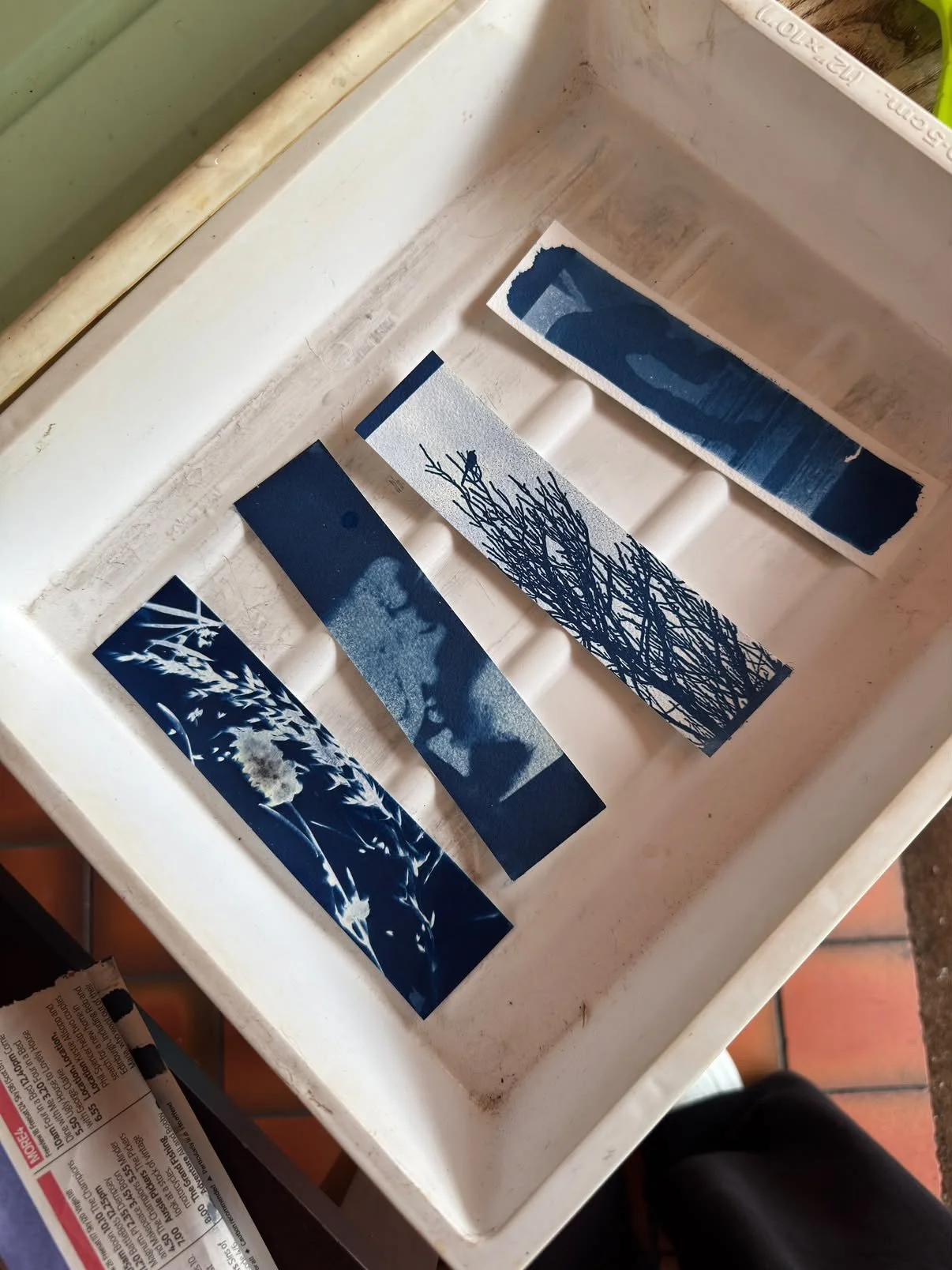
It was such an honour to be welcomed into a space so full of inspiration and quiet power - a space held for women and non-binary people, where creativity could breathe , voices could be heard, and ambition could exist without apology. It truly made me proud to be a northerner. Opportunity is vital to the north yet it is often hard to find amid the overpowering capitalisation of mainstream arts and culture. All you need to do is look around you. Venture in to your local community spaces, get chatting to strangers in a pub or cafe, and you will discover a world of opportunities and incredible people waiting to welcome you into their community.
Flock hosts workshops in and around Leeds roughly once a month, doing their best to keep as many of them free or as low-cost as possible. There is no pressure to commit religiously, either. They understand that life has a habit of filling up — demanding jobs, family, obligations, the thousand small things that can pull us away from ourselves. Flock simply keeps the door open, ready for whenever you need to step through it: to loosen your grip, free your spirit, and see what your inner creative might have to say.
And there is, importantly, no expectation of getting it right.
Perhaps that is the real gift of a support group: the permission to be a beginner. To try, fail, make a mess, try again. To push at the edges of what you think you can do without the fear of falling short. Trial and error is, after all, one of the most profoundly human practices we have — how we learn, how we make, how we become.
To find out more, visit Flock’s Instagram page - @flockfoto
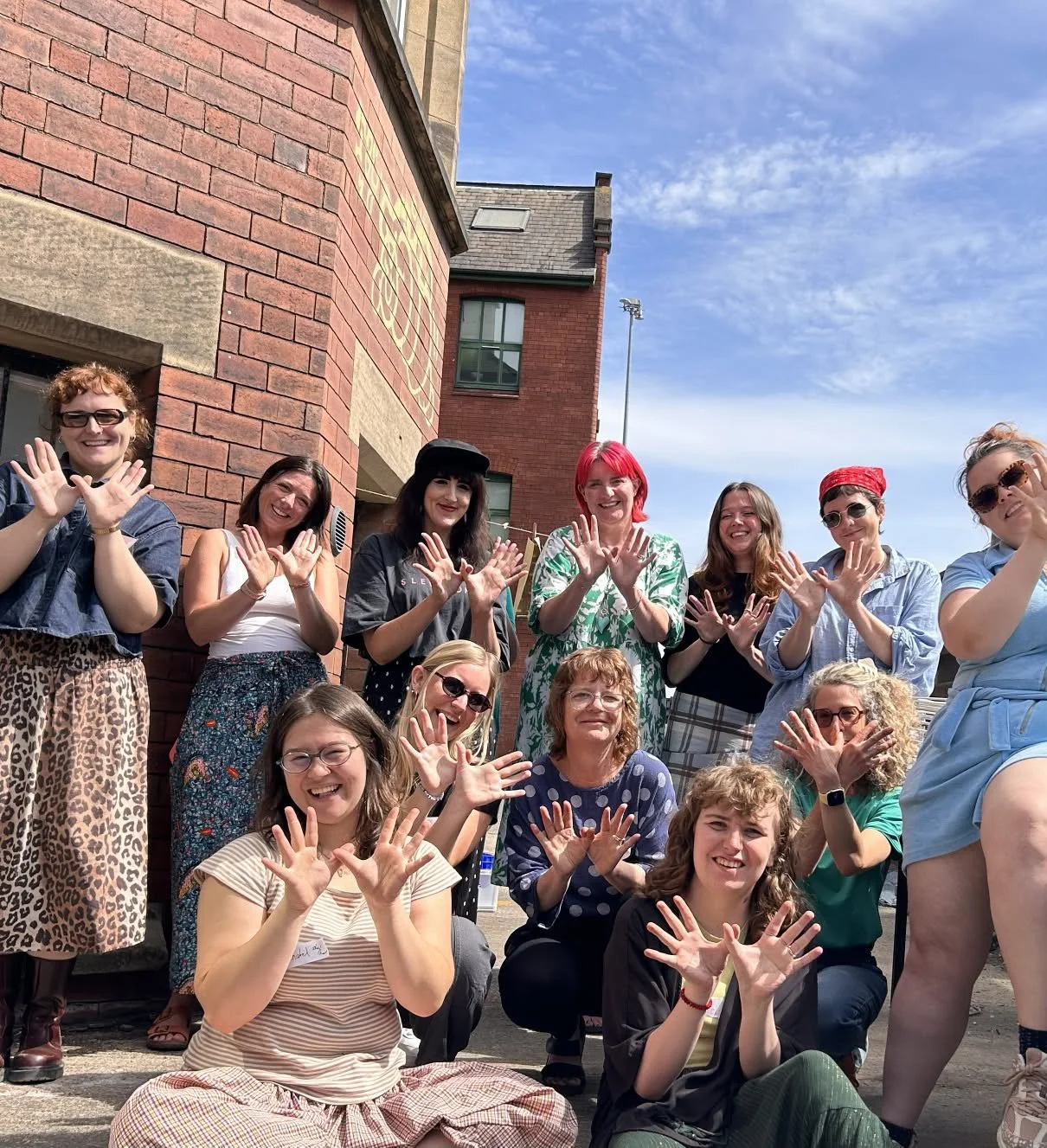
You can also take a look at each individual member and the wonderful work they produce:
Angie Thompson - @angiethompson_photography
Annabel Cohen - @flaneurbel_
Bianca Wallis-Salmon - @b.ian.c.a
Ciarrai Samson - @ciarraisamson
Emily Downs - @photographydrawingroom
Emma Gibbon - @emmagibb
Hannah Guy - @hannahguyartwork
Izabella Tulip-Parkin - @izabellatulipparkin_photo
Joanna Jowett - @joannajoewtt
Liz Samways - @ inkylinkyliz
Morgan Campbell - @stalkingtheimage
Natalie Kolowiecki - @kolowieki
Valerie King - @veryeerievalley
A note from me; a huge thank you to all of the wonderful members of Flock who made my Sunday afternoon one I will reflect on for years to come, in my own ventures and practices.