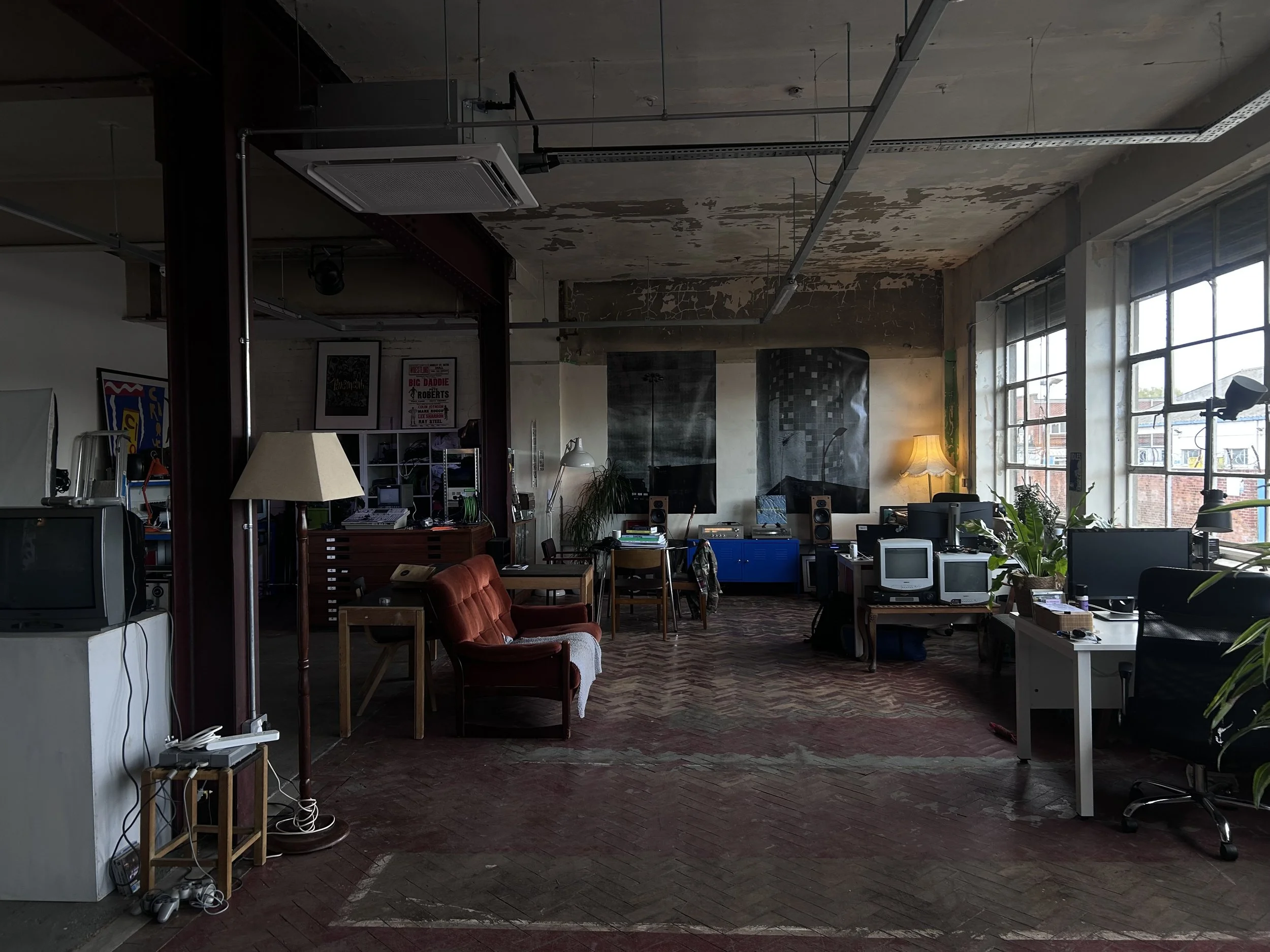
Access is at the heart of A Room Up North. I wanted to create a space that documented, celebrated and connected Northern creatives across backgrounds, abilities, disciplines, and generations, not as a regional footnote to British culture, but as culture in its own right. The story is a familiar one; mainstream media and the cultural industries look towards London, where money moves quickly, networking trumps talent and a particular kind of creative identity is packaged as something to aspire to. Elsewhere, talent is left to get on with it, often without the platforms, funding or connections needed to make itself visible. The message is subtle but persistent: if you want to matter, you must first learn to look like somewhere else.
The powers that be drip-feed taste. They decide what gets seen, what gets funded, what gets written about and, eventually, what gets remembered. Over time, their preferences begin to masquerade as universal standards of quality. A Room Up North grew from a refusal to accept that culture must be validated elsewhere before it can be valued at home. It is about shifting the gaze, building connections on our own terms and making room for the people, places and ideas that fall outside the approved picture of what a creative life should look like.
The more I think about it, the more I come to realise that even the very understanding of what access means is rose tinted or fed to us by a higher power. It is true that opportunities for art education are few and far between in the north, we have minimal large-scale events and barely get a mention in the big mags and papers. We do, however, have plenty of access to culture and community, our own culture and community, which has for too long been pathologized by mainstream narratives. We are not just local talent or grassroots organisations (although we do have some incredible local and grassroots superstars). We are people with passion and a community that does not take no for an answer. Relating to people is also a huge factor in feeling like a failure or not good enough to pursue your dreams. Not being able to see yourself reflected in the masses is not always a bad thing. We should be taught that difference is a superpower, your original contribution to a project, idea, life in general. Talent should not be measured by relatability. Ignoring difference is a very isolating practice and is often the nail in the coffin for many emerging creatives. It makes them believe they are not good enough or they don’t have it - have what, exactly?
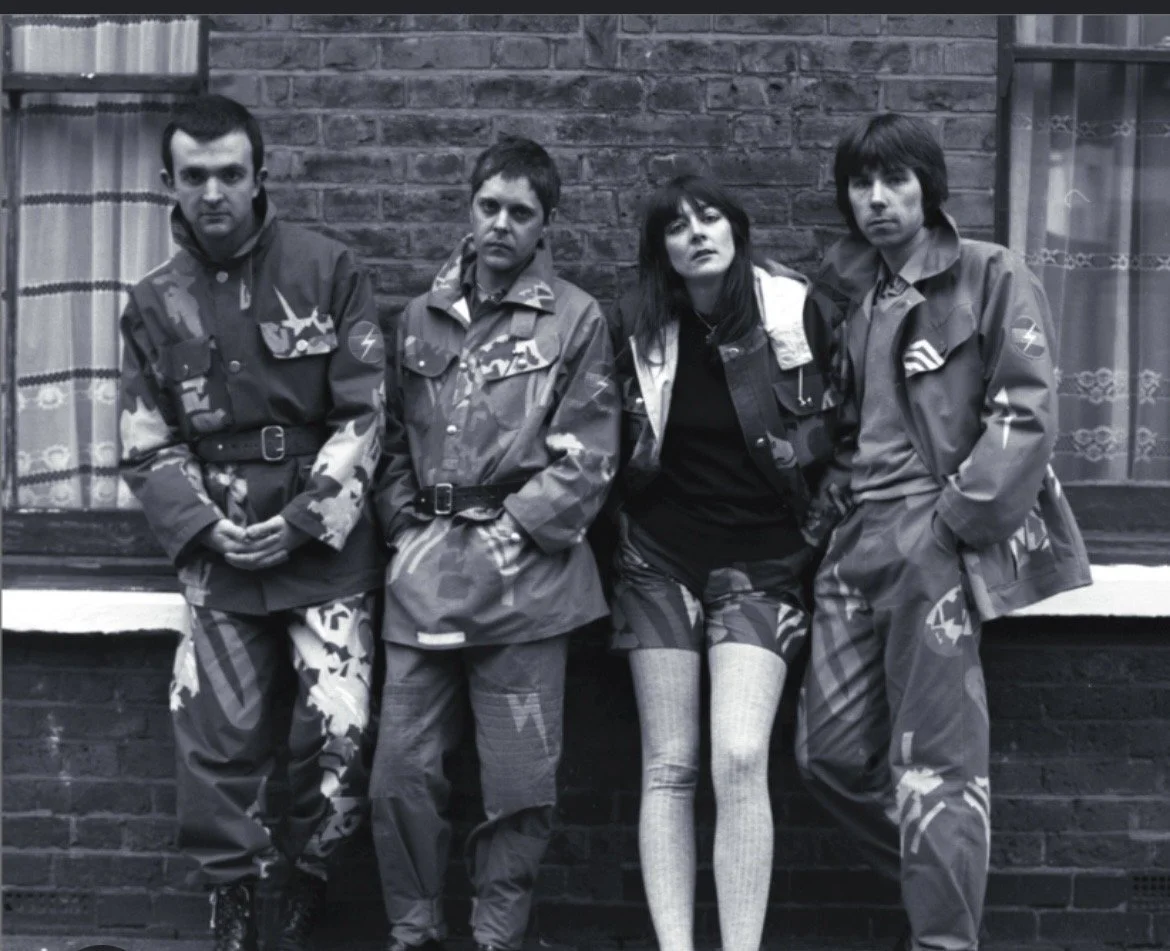
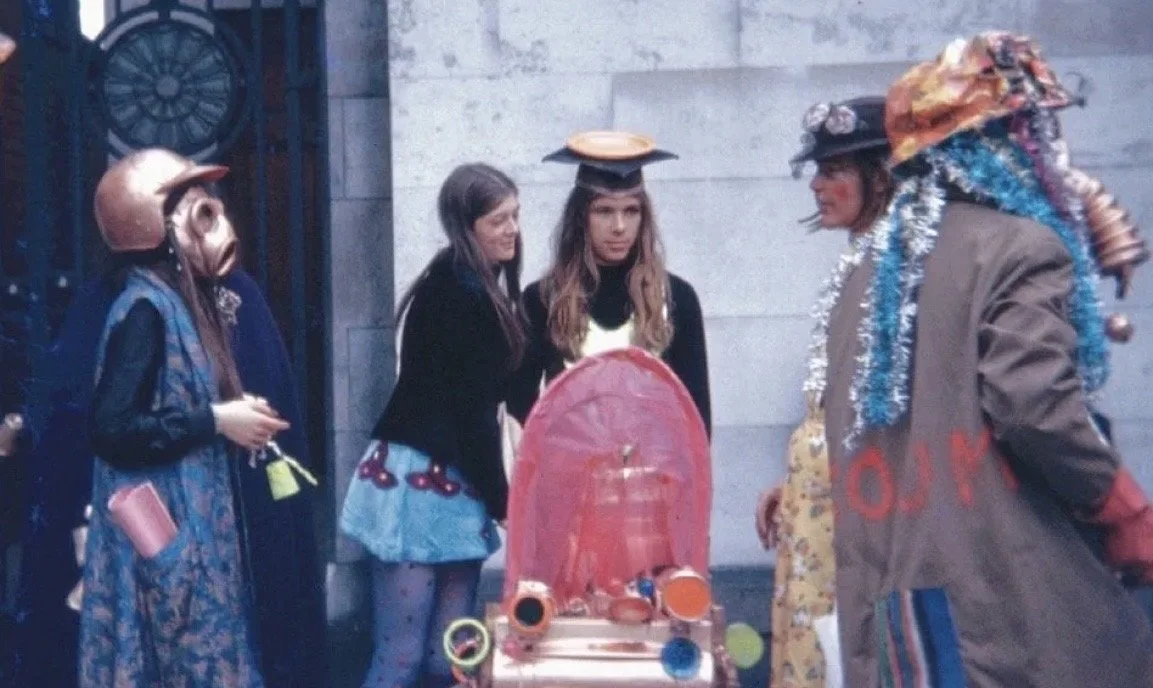
There is a very specific history of Hull’s creative scene that I am currently in the rabbit hole of that I think is worth reflecting on in times when identity can be a stranger - Cosey Fanni Tutti and COUM Transmissions. In the late 60s and early 70s, COUM emerged from their artist communes and ambiguous lodgings to the streets of Hull, confronting the city-folk with pretty insane (and I mean that with the greatest respect) theatrical performance pieces and experimental music that reignited stagnant memories of Hull’s industrial landscape. They worked against the grain of mainstream creative industries by laying bare their own identities and using their social history as raw material for their work. They took London by storm at the ICA exhibition in 1976 titled ‘Prostitution’, earning them the name ‘wreckers of civilisation’ and being a hot topic of conversation in parliament. COUM did not conform to mainstream ideologies of creativity, they simply exercised their own. Tutti practiced her art alongside working sometimes gruelling jobs, riding the wave of success and failure, but using the community around her to get back up and keep going. I could go on for pages talking about COUM - Cosey Fanni Tutti in particular, a truly revolutionary artist. What I am trying to get at is that the north, and Hull in particular, has always had a specific way of doing things and a way of going about them that requires no permission from anybody. Hull is a mouldable yet unbreakable city. It gives you the raw materials in which to sculpt and model your own place within the landscape, whilst also remaining grounded in its history and its solid community that is there to pick you up when you fall.
Stewart Baxter, creative director, photographer, musician (just to name a few), and the creative team started Hinterland Creative with a very similar goal. To give young creatives the space and the time to explore themselves and their art, to slow down and reconnect with their community, and to produce some really fucking cool art and music. The unfiltered spirit of COUM has not died out, it still lingers across our northeastern coastal town, and it’s legacy lives on in Hinterland.

Hinterland Creative Team and Stewart Baxter (right). Image taken by Luke Hallett
When Hinterland first started in 2018, Stewart offered three paid internships to people who were ready to embark on their creative careers, focusing mainly on music. They came armed with remarkable talent and skill, but little knowledge of how to approach an industry that from the outside seemed to be gilded by blinding lights and cut-throat ideologies. Eight years on, Hinterland continues to foster eager creative minds and provide them with space, time, and a community in which they can learn at their own pace outside of academic settings, and make invaluable connections that open up the once inaccessible creative world, with Hull at the very centre of production.
You can find Hinterland at 25 Francis Street. A seemingly unassuming area of Hull severed from the main sprawl of the centre by Freetown Way, the yellow-brick road to Spiders. The buildings around there have a character that can only be described as distinctly Hullensian. Terraced houses spilling into the yards of crumbling factories and warehouses. The ghosts of industry and community hiding in eternity behind the grumbling of traffic and e-bikes. The slight intimidation from the emptiness of rough and ready buildings down a street hidden from view is very soon nurtured into comfort as a workman on his way to the nearest caf tells you to watch out for that puddle.
Inside the converted factory is an entire ecosystem of Hull’s creative collectives. The first to greet me was a very dapperly groomed Chip, a handsome miniature schnauzer with waves that girls on Bondi Beach could only dream of, followed by Stewart of course, and a big welcoming hug. I had met Stewart before, if only very briefly. I often got in the way of his moving furniture and instruments in Maister House, Hull, where I used to go for my saxophone lessons.
Stewart showed me round the building. We popped into Atelier 8, a collaborative studio space for independent fashion and creative practitioners. I stepped into the small room engulfed in the most beautifully crafted clothes and costumes. Something clicked in my mind as I realised how alien it felt to be surrounded by so many hand-crafted garments; each hanging from walls and railings, weighted down by the labour of love stitched into every seam. Such human ability felt like a relic. Something kept quiet or hidden away in the privacy of homes or bespoke institutions. The practice of embroidering, weaving, or stitching textiles form some of the most ancient crafts in human history. Material culture has a deeply tangible and visceral connection to communities and solidarity. Seeing such culturally significant detailed work taking shape within the architectural binds of industrial labour history made me think about the power in regenerative histories and collective actions, how our landscapes provide us with raw material to reshape and relearn. How historical landscapes invite wonder and inspiration and feel welcoming to our projects.
We travelled up some stairs to the old factory floor above to see the remnants of the Unthinkable exhibition. I felt like I was wading through fragments of half-formed, dream-like thoughts. Every corner of the vast room was occupied by a unique artwork, each seeming estranged to one another, existing in different planes, but finding common ground in the community of their makers.
What struck me most was how little the space intimidated me. Galleries can have a peculiar talent for making you feel that creativity belongs to somebody else. That you ought to know the rules before you enter, understand the references before you look, and preferably have a degree to prove you deserve an opinion. Here, creativity felt almost tangible. Not polished into submission or presented from a safe distance, but alive, messy and within reach.
“It shows people that anyone can create,” Stewart said.
Anyone. Such a small word, carrying a rather enormous proposition.
We talk endlessly about creativity as though it were a rare and precious gift, bestowed upon a lucky few and best left to those with the right qualifications, connections or disposable income. But what if the problem isn't a lack of talent? What if it's a lack of space, support, time, money, or the simple permission to be rubbish at something before you get good?
In places like Hull, outside the familiar circuits of metropolitan cultural life, creative ambition can come with a particularly heavy price tag. Not because people lack imagination, but because imagination doesn't pay the rent. There is a living to make, bills to cover, a life to keep upright. When survival takes precedence, the idea of getting things wrong is like a luxury. You don't necessarily have the time to make a mess when you're already trying to keep everything together.
Stewart and I got talking about the value of failure. Proper failure. Not the sanitised Diary of a CEO sort that gets repackaged as a lesson in resilience, but the glorious, embarrassing business of making something that doesn't work. Of tearing it apart. Breaking it. Starting again. Of making things that are ugly, strange, too much, not enough. Of allowing yourself to be angry with a piece of work, or fall in love with something you never intended to make.
There is a peculiar freedom in not knowing what you're doing. Mistakes prise open the little rooms in our minds where we keep little memories and recollections. They force us to look elsewhere, to follow a thought beyond the point at which it stops making sense, to discover that the wrong turn might have been the interesting bit all along.
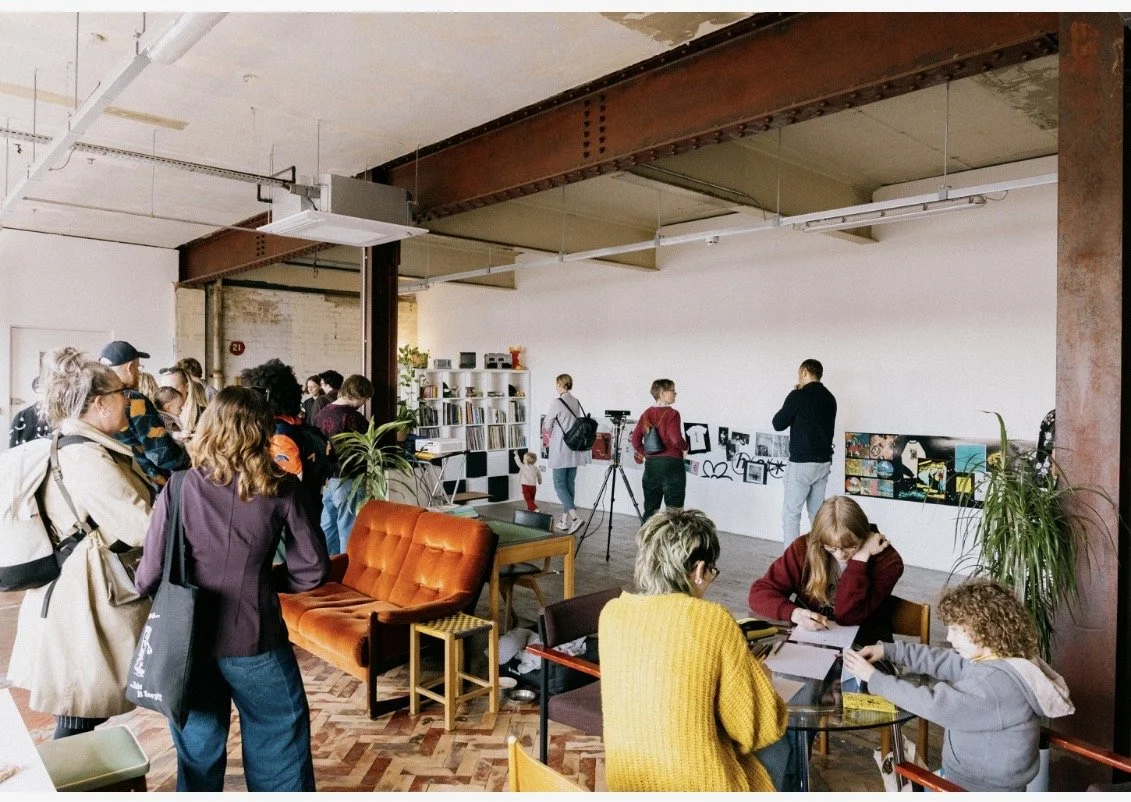
Image of Hinterland Creative Office by Luke Hallett
Perhaps this is what spaces like Hinterland offer, beyond the workshops and the materials and the wonderful things people make. They offer the freedom to begin without knowing where you'll end up. A place where creativity isn't a competition, a career ladder or another opportunity to prove yourself, but something you are allowed to do simply because you are here.
And perhaps that's the most radical thing about it. Not that everyone can create, but that everyone should have the chance to find out what happens when they do.
After all, none of us really knows what we're doing at the best of times.
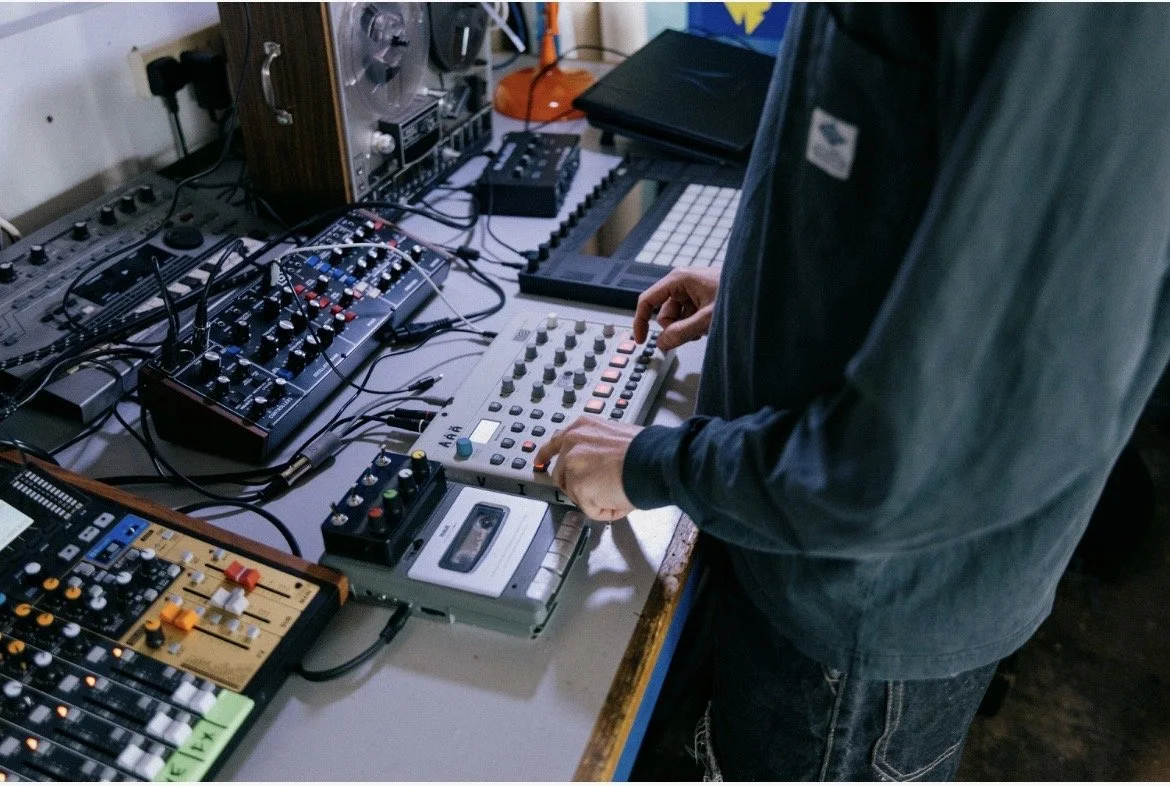
Image by Luke Hallett
We carried on upstairs to the Hinterland office where we pulled up a pew and had a good old chat. Stewart told me bits about his early years and how he got into the creative industry. He initially started out in music, forming a band with his brother. An unconscious decision, as he described it. Music was an escape for the Baxter brothers, much like it is for most musicians, although for Stewart it was more than psychological. Growing up on Hessle Road, Stewart experienced first hand what it meant to survive in Hull and how to go about doing it. Opportunity for change or ‘social mobility’, as some brainy folk may call it, was, and still can be, very slim. Music was not just a hobby or a talent, but a lifeline that could get him and his brother out of the cycle. His reminiscing on his early life sowed the seeds of his life-long creative output and what Hinterland would come to be. Stewart spent many years working as a youth support worker and arts developer, being a key figure in Warren Records -a youth-led, non-profit records label based out of The Warren Youth Project in Hull, where aspiring young musicians were given the opportunity of equipment and space that may have been near impossible for them to do alone.
Stewart taught himself music, taught himself to work a camera, and then put those skills, and the contacts he gathered along the way back into the community that shaped him. Rather than reproducing the cut-throat hierarchies of the creative industries, he built something that worked to a different logic. Here, Hull wasn't a stepping stone to somewhere bigger, nor its people a talent pool waiting to be discovered by someone from elsewhere. The city was the centre of production; its community, the investment. Knowledge was something to be shared, not hoarded, and creativity something to build together rather than compete over.
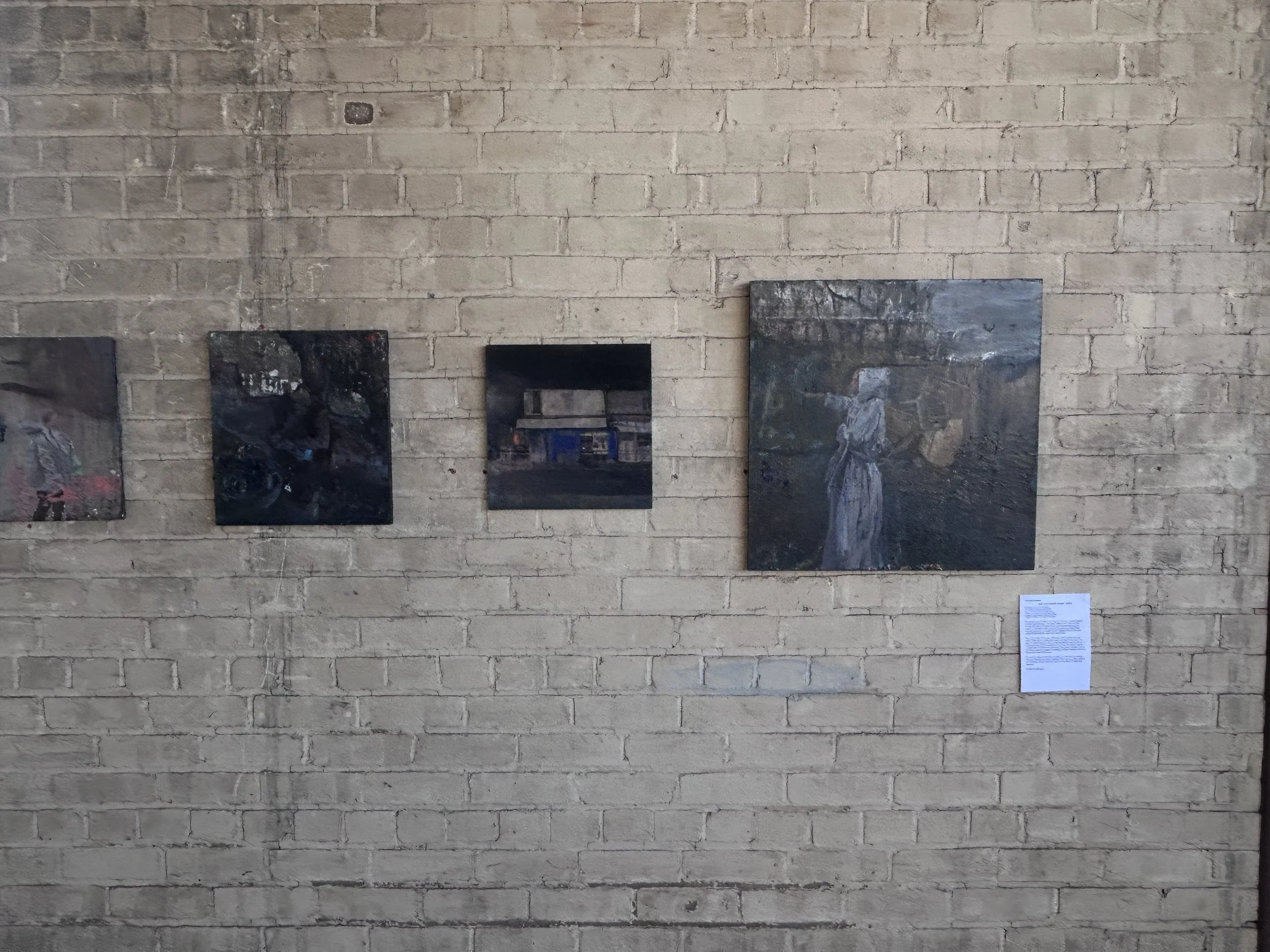
Paintings by Alex Kalogerakis
“I made Hull work for me”, he said.
Perhaps the most enduring theme of my afternoon with Stewart was the heavy, quiet architecture of time. How important it is to the practice and learning of art, how it shapes the contours of identity, constructs memories, and allows relationships to take root. Yet, in our hyper-connected, hyper-digital landscape, time is weaponised. We live in an age of the instantaneous, where everything is on demand, even success is measured by speed. Stewart directly interrogates this friction between time and memory, both in his art and his creative direction.
This philosophy breathes through Home, a film by James Cooper currently on exhibition at Humber Street Gallery. The film captures a musical ensemble conducted by Stewart, bringing together members of Eclectic Music, in a piece that was deeply experimental and profoundly experiential. To surrender this work to the digital ether of streaming services like Spotify would be to betray its very soul. It would confine a living experience with rigid digital frames; doomed to be skipped, replayed, dissected, and ultimately discarded at the fleeting touch of a finger to screen. To challenge this modern rush of consumption, Stewart turned to vinyl. He tracked down a craftsman in Leeds who owned a relic a history; a phonograph lathe used during the Nuremberg trials. Into twenty separate vinyl discs, Stewart had the work etched. Each record carries a completely unique B-side. Intimate, spoken-word voice notes from friends who listened to the piece and laid their hearts bare.
Stewart handcrafted the record sleeves using materials sourced entirely from neighbouring businesses, utilising local paper and the creative facilities at Hinterland. The entire process was beautifully organic, almost ecological, granting Stewart absolute, tactile sovereignty over his labour.
By embedding these values into his practice, Stewart provides young creatives with more than just a studio; he offers a sanctuary where they can reclaim agency over their work, connect deeply with their environment, and learn that success is not measured by the speed of a click, but by the depth of the experience.
Something seems to be brewing up here in the North. Something exciting. Renewed passion and interest in local histories is being met with artistic expression, and in turn, a sense of purpose is being rekindled.
As the afternoon drew to a close and our conversation exhausting all possible twists and turns, I asked Stewart what Hinterland means to him.
“It is a massive fuck you to big institutions” he quite rightly replied.
Places like Hinterland are remarkable, not only for the opportunities they breed into local communities, but also for the work they do in exposing just how performative and inauthentic leading industries are. Creative minds should not be isolated and made to believe they are in an every-man-for-himself environment where failure is the endgame. They should not be confronted with briefs and call outs that are so wildly conceptual that even Freud himself might have a panic. Creativity should not be a trap in which the ones operating outside of academia or highly-strung networks fall short and on their faces.
In an old factory in Hull a different kind of work is taking shape alongside the memory of industrial labour. Something new is taking shape. Voices finding room, ideas finding life, a community building its future with its own hands. Hull is fighting back, steel toecaps ’n’ all.
A huge thank you to Stewart for enriching my afternoon with hope, inspiration, and loads ah laughs.