cosey fanni tutti: a hull revolutionary
I am rather ashamed to admit that my introduction to the mind-bending, incomprehensible talent of Cosey Fanni Tutti came very late. Quite recently, if I am to be brutally honest. The shame mostly stems from the fact that just like me, Cosey was proudly, born and bred in Hull, that remarkable city of white phone boxes and pattie butties.
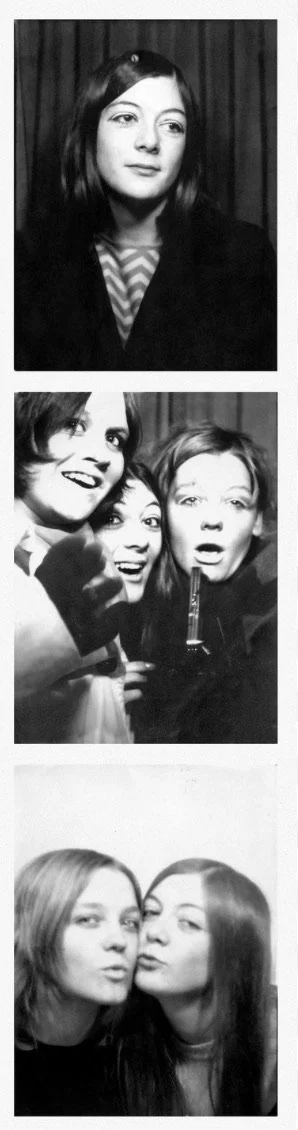
I was listening to an episode of Feminist Artist Lives, a podcast from the producers of Feminist Art Making Histories; an online archival collection of oral histories from women artists. In the very first episode, only a short introduction to the series, was the first time I felt that little pull in my heart; that distinct ring of a Hull accent, if only for a fleeting breath; Cosey Fanni Tutti. I continued the episode, and the following one, on a little high. Its a strange buzz I get after hearing someone with my accent or talk about Hull anywhere but the city itself. We’re at the end of the corridor on the M62, we don’t tend to get very far past Clive Sullivan Way.
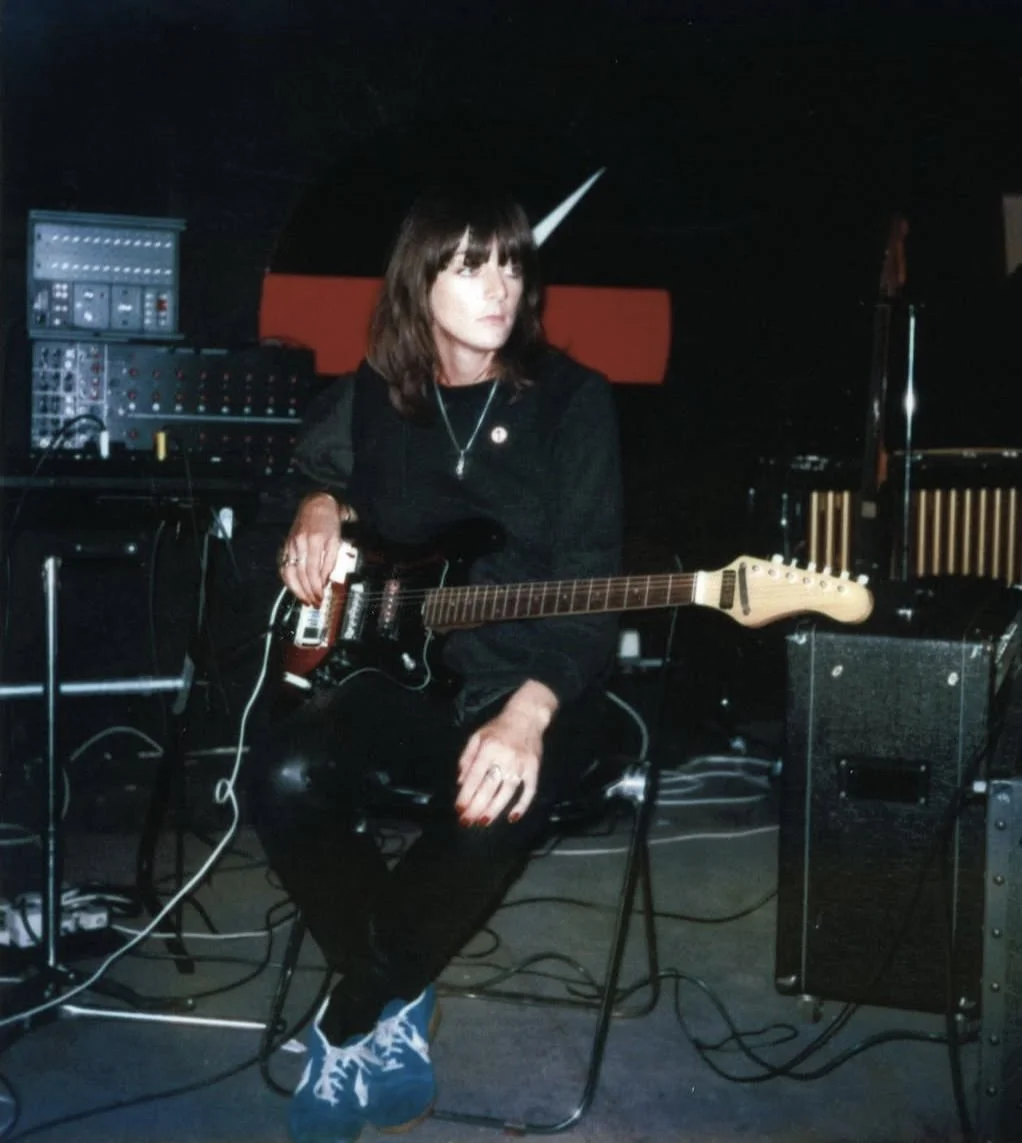
A few weeks went by before I crossed paths with Cosey for a second time. Episode 7: Class Politics. There it was again, those soulful tones of a Hull accent wrapping its big burley arms around my ears and saying ‘theres nowt to worry about love’. Cosey talked briefly about her early years in Hull and the difficulties she faced as a working-class girl with big dreams and a northern father. Art for Cosey, like many still in the north, was a sacrifice to be made rather than a path to follow. It was family, stability, work, or art. The ultimate battle of survival - a losing battle if money and creativity are both the means of survival. Cosey takes us on the amorphous journey of her early career in her autobiography, Art,Sex, Music. Her sobering prose put a comforting smirk onto my face with each page. Cosey references the characteristic bluntness of Hull-folk throughout the first few chapters, but the apple doesnt fall far from the tree. Cosey’s matter-of-fact representation of her quite traumatic and unstable years reminded me of my own friends and female family members, that unbreakable attitude, just pick yourself up and get on with it girl, no time to be sulking. Despite her northern frontier, Cosey’s story is still so reflective of our own society and there were times throughout the book where I thought that our situation has actually worsened since the 1970s. Inbetween the anarchic living situations and fugitive friendships, the chapters are peppered with opportunities, venues, projects, communities, people.
The Hull Art’s Centre, for example, or the numerous music venues and discos, or festivals that hosted the likes of Pink Floyd and Jimi Hendrix. Cosey herself said that despite being the most violent city in the UK, Hull in her day was a creative haven, full of passion, however you wish to understand it. Growing up in Hull, I could probably name just a few known venues and opportunities available for budding young creatives, but many social clubs were no longer there. We still have Polar Bear, Adelphi, and Spiders, the Holy Trinity of Hull’s cultural scene, but like most grassroots venues in today’s crumbling world, they are struggling, and they aren’t quite what they used to be because of funding cuts and the lack of creative optimism in working-class areas (thanks to our limited access to funding and education).
There were quite a few things I took away from my deep dive into Cosey Fanni Tutti’s life and art - both forces indistinguishable from one another in Tutti’s philosophy - that I think are incredibly important to consider in 2026.
The first is how Hull never seemed to leave Tutti. The language of her biography, the distinct recollections of specific places in the city, the character of the people, the indestructibility of the women, and its rich cultural history - even if most of it remained only as piles of rubble underneath her wandering feet. She effortlessly carries the very soul of the city through her life and work, albeit sometimes in controversial ways and often very discretely, but it is this kind of cultural identity that needs to be celebrated and nourished in today’s world. She brought to the artworld refreshing, wildly comlpex and utterly bizarre forms of creative practice that all seem to celebrate, or even deeply criticise her early environment and cultural heritage of Hull. She is difficult to fit into one distinct category and that is beautiful. As a working-class woman, Tutti is a golden ticket for any cultural theorist or art historian. But there is something far more complex and nuanced about her life and work that challenges our understanding of what it means to be a woman artist and a working-class artist, and how each identifying characteristic complicates the other. I hope to share a few thoughts of my own on Tutti’s life and art, some things that resonated with me on my own journey of feminism and creativity.
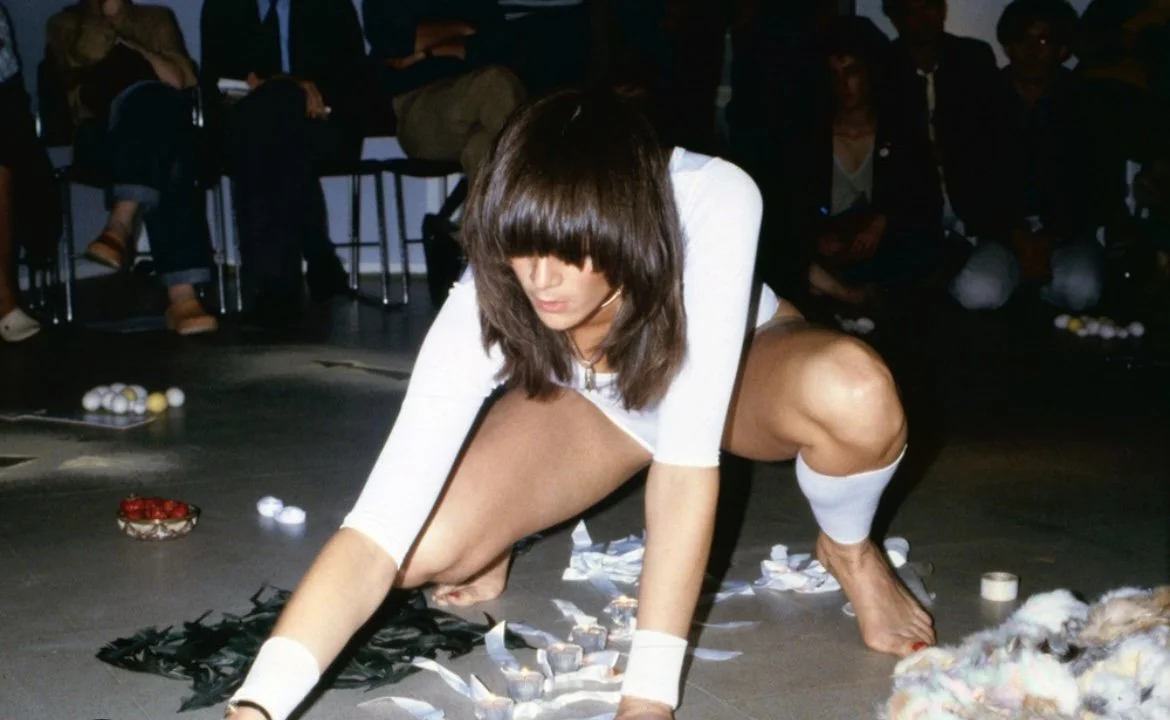
If you know of Tutti’s work, you may be familiar with Magazine Action (1972-80) or Prostitution (1979) with COUM Transmissions. Her portfolio is not for the prudish. After leaving Hull in the early 70s, Tutti, for reasons of both personal intruige and financial support, experimented with nude photography and pornography, securing shoots with established but mostly quite inconspicuous photographers. She summed up her experience quite well in a diary entry - ‘was I popular or was I being used?’. COUM Transmissions exhibited Tutti’s images at the ICA which caused quite the stir, earning them the name, ‘wreckers of civilisation’. Her unforgettable poses and the rawness of her intentions continue to ruffle the feathers of feminist discourse. In its time, her work rebelled against the ideologies of new radical feminists like Catherine MacKinnon and Andrea Dworkin who were fighting against pornography for its exploitative and oppressive nature, meanwhile Tutti was finding freedom and fighting her own battle in practicing pornography and nude photography. She found power in transgressing rules and boundaries, feminist ones included.
There are countless academic studies that try and place her work within the vast landscape of feminist artmaking, for which I am certain there is a confirmed place. However, I can’t help thinking of Tutti’s own relationship to feminism and her own attitude towards womanhood that was in some ways shaped by her cultural heritage. She has spoken of her experience of feminism in her early career, stating that it wasn’t something she actively considered. Feminism, to her understanding, was a concept curated by middle-class white women in university settings, defining what it meant to be a women from their ivory towers. Tutti herself made note of how much feminism has changed since then, how it is more inclusive, which is true. But, I have a deep desire to understand what feminism looked like to Tutti, in a working class community, a community that is also my heritage.
The first words I heard Tutti say on the podcast were, ‘come to Hull and then try and say what women should and shouldn’t do to survive’. And I quite simply havent been able to stop thinking about it since. She is correct, even if she is speaking from her experiences of Hull over 50 years ago, history is a powerful thing that silently guides generations into ways of being and understanding.
It seemed almost natural for Tutti to approach her work as both man and woman, having the power of both sides, and that is clear in her nude modelling work. At the heart of her work is this androgynous need to survive and challenge barriers that stood in the way of it, regardless of her gender. Her work is her liberation, her sexual liberation, and the liberation of her identity. I can’t help but think of the history of Hull’s women and how Tutti’s attitude towards her practice seems to resonate with her matrilineal cultural backdrop. I am not talking of direct family here, but the women around her, the women of her society, her workplace, her history. Some of the women who spring to mind are Lilian Bilocca, Christine Smallbone, Mary Denness and Yvonne Blenkinsop, who became known as the Headscarf Revolutionaries. Women who fought for better working conditions for their husbands on the trawler ships, having meetings in pubs, being in fights with men in those pubs, marching to parliament, and changing the course of Hull’s fishing industry, a feat unions had chased for decades, by defying domestic stereotypes. This happened in 1968, a pivotal year in feminist history, yet it is often neglected from the discourse. These women weren’t challenging patriarchal structures, they were challenging the labour market and the conditions of work, it didn’t matter to them that society placed them in the opposing sphere of domesticity. They made men’s business their business, because it was business that was integral to survival.
Women fighting for better conditions on trawler ships and a woman artist challenging the labour of sex workers and the art industry seem worlds apart. I appreciate they are. But throughout Tutti’s biography are passing mentions of similar attitudes, similar women, like the workers she came across in a chess factory, strong, formidable women. I like to think that Hull ignited the spark in Tutti’s brazen courage towards her work. She told us in her biography that her dad taught her to fight on Bilton Grange estate and she provides us with many examples of her holding her own in difficult confrontations, never losing the instinct to stand her ground, even when she was battling a complex and at times abusive relationship with her partner and co-star of COUM Transmissions, Genesis P-Orridge. During her brief stint at Prince Street, a seventeen-bedroomed house that she presents to us as like a mosolleum of Hull’s history, she spoke of her role as sole breadwinner for the couple and the various friends that came to stay with them. Mostly all middle-class privately educated men who had fled their roots in order to find their creative paradise. Tutti worked various jobs, cooked every meal, cleaned up their chaos, yet she refers to this as unappreciated labour as her own method of survival. Her labour and her body were central to her creative practice and the survival of COUM. And in later years, she exploited the sex industry by controlling her images, transforming her labour to art and making pornographic images irreproducible with her signature.
Bringing her early and personal life into frame with her images for Magazine Action, Prostitution, and provocative theatre work that sometimes involved live sex shows offers a new understanding of the processes behind her artmaking. Her motto, “My life is my art and my art is my life” is the the only method of understanding her biography, in which she blurs the radical and domestic as mutually reinforcing powers behind her creativity. It is surely impossible to seperate Tutti’s practice from her cultural heritage. In understanding Hull, you understand Cosey Fanni Tutti.